Managing Joint Stiffness And Muscle Aches After Treatment
Joint stiffness and muscle aches are some of the most common and frustrating problems men face after prostate cancer treatment. Even once surgery, radiation or hormone therapy is finished, the body can feel tight, sore and reluctant to move. Simple tasks like getting out of a chair, walking up stairs or rolling over in bed may feel harder than they used to.
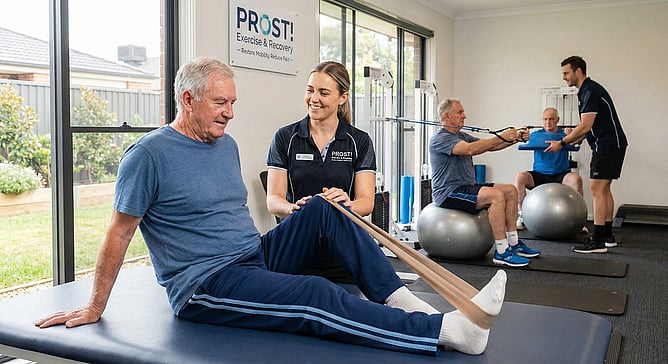
The good news is that this stiffness is not permanent. With the right kind of movement, guided by qualified professionals, it is often possible to reduce pain, restore mobility and feel more confident in your body again. At PROST!, supervised stretching, mobility and strength sessions led by exercise physiologists are designed specifically with prostate cancer recovery in mind.
This article explains why stiffness and soreness are so common after treatment and how structured sessions, like those at PROST!, can help you move more freely and enjoy day to day life again.
Why Joint Stiffness And Muscle Aches Happen After Prostate Cancer Treatment
Stiffness and aching rarely come from just one cause. They usually arise from a combination of physical and lifestyle changes that occur during and after treatment. These can include:
Time in hospital beds and recliners with very little movement
Pain and understandable caution around surgical wounds
Inflammation in tissues exposed to radiation
Hormone changes that weaken muscle and bone
Fatigue that encourages rest over activity
Anxiety or low mood that reduces motivation to exercise
When these factors add up, the result is often tight muscles, stiff joints and a body that feels older and less responsive than it should. Understanding where the stiffness comes from is the first step in knowing how to address it.
How Surgery Can Affect Joints And Muscles
After prostate surgery, men typically spend time in hospital followed by a period at home where movement is reduced. Even a few days of much lower activity is enough for muscles to weaken and joints to stiffen.
It is natural to hold your body in protective positions to avoid pulling on the surgical area. That might mean moving more slowly, taking smaller steps or keeping the hips and lower back quite still. Over time, these protective patterns can become habits. Some muscles work overtime to guard the area, while others are underused.
Common post surgical issues include:
Tight hip flexors from long periods of sitting or lying with hips bent
Stiff lower back from moving cautiously and avoiding twisting
Weak gluteal muscles and thighs from reduced walking, stairs and general activity
Neck and shoulder tension linked to stress and altered posture
Without guided movement, these patterns can persist long after the scars have healed. This is where structured rehabilitation with an exercise physiologist can make a real difference, helping you gradually let go of protective patterns and return to more natural movement.
The Impact Of Radiation Therapy On Mobility
Radiation therapy targets cancer cells, but the surrounding healthy tissues can also be affected. Pelvic muscles, ligaments, nerves and blood vessels may all experience changes.
Over time this can lead to:
Increased stiffness in the hips and lower back
A sense of tightness or heaviness through the pelvis
Reduced flexibility in the hamstrings and hip muscles
Changes in nerve sensitivity that can feel like deep aching or discomfort
Many men also experience radiation related fatigue. When you are tired, it is easy to sit more and move less, which further contributes to joint stiffness and muscle weakness. Carefully graded mobility and strength work, such as that delivered in PROST! sessions, helps counter these effects while respecting your energy levels.
Hormone Therapy, Muscle Loss And Aching Joints
Androgen deprivation therapy, or hormone therapy, is very effective at controlling prostate cancer, but it can place extra demands on muscles and bones. Lower testosterone levels are associated with:
Loss of lean muscle mass
Reduced strength and power
Decreased bone density
Increased body fat
With less muscle supporting the joints, everyday activities place more strain on knees, hips, back and shoulders. This can show up as:Aching knees when walking or going down stairs
Sore hips after sitting for long periods
Stiff, uncomfortable lower back, especially in the morning
Generalised body soreness that eases once you get moving
These changes are not simply ageing. They are a predictable response to hormone therapy and lower activity levels. Targeted strength training with an exercise physiologist is one of the best ways to counteract them.
Why Rest Alone Is Not The Answer
When your body hurts, rest feels like a sensible response. Short periods of rest are important, especially straight after treatment. However, if rest stretches into weeks and months, it often becomes part of the problem.
Without regular, appropriate movement:
Muscles continue to weaken
Joints become less lubricated and more creaky
Tendons and connective tissues tighten
Balance and coordination decline
This creates a cycle where movement feels uncomfortable, so you avoid it, and the more you avoid it, the worse stiffness and pain become. A key goal at PROST! is to help men safely break that cycle with supervised, achievable exercise that respects where you are starting from.
How Supervised Stretching Helps Release Tension
Stretching is often the first step to feeling more comfortable. Done properly and under supervision, stretching can:
Reduce muscle tightness
Improve joint range of motion
Ease the sense of being locked up or restricted
Encourage blood flow to stiff and sore areas
A well designed stretching program focuses on common problem areas after treatment, such as:Hip flexors at the front of the hips
Hamstrings at the back of the thighs
Gluteal muscles in the buttocks
Calves
Lower and upper back muscles
Chest and shoulders, particularly if posture has become more rounded
At PROST!, exercise physiologists cue each stretch, helping you find the right position, intensity and duration. Stretches are held at a comfortable level while you breathe steadily, which encourages the nervous system to relax rather than guard. This careful coaching means you get the benefits of stretching without provoking flare ups.
Mobility Training To Restore Easy Movement
Static stretching is only one part of restoring comfort. Mobility training focuses on moving joints through their available range in a smooth, controlled way. It is like gently oiling a rusty hinge.
Mobility exercises might include:
Hip circles and leg swings to free up the pelvis
Spinal rotations in sitting or standing to improve back mobility
Ankle and knee movements to prepare for walking and stairs
Shoulder rolls and arm reaches to ease upper body tension
After prostate cancer treatment, many men are understandably wary of twisting, bending or reaching. In a PROST! session, these movements are reintroduced gradually, with an exercise physiologist monitoring your technique and response. Over time, mobility work can:Make it easier to get in and out of bed or a car
Reduce morning stiffness
Help you bend more comfortably to put on socks and shoes
Encourage a natural walking pattern instead of guarded, shuffling steps
Building Strength To Support Joints And Reduce Pain
Strength training is one of the most powerful tools for managing joint pain and muscle aches after treatment. Stronger muscles can absorb more load, which reduces stress on the joints. For men on hormone therapy, strength training is also vital for preserving muscle mass and supporting bone health.
A supervised strength program at PROST! typically focuses on:
Leg strength through sit to stand exercises, step ups and supported squats
Hip and glute strength using bridges, side leg lifts and controlled hip movements
Core stability with gentle abdominal and back exercises that support the spine
Upper body strength using resistance bands or light weights for rows, presses and shoulder work
All exercises are individually scaled. You might begin with body weight only or with support from a rail or bench. As strength and confidence grow, resistance and complexity are gradually increased. The aim is always to challenge you enough to stimulate improvement without pushing into unsafe territory.
The benefits of this approach include:Less knee and hip pain when walking, standing or using stairs
Better posture, which can reduce neck and back aches
More confidence with everyday tasks such as lifting shopping or doing yard work
Greater capacity to return to hobbies and recreational activities you enjoy
What A Typical PROST! Session Might Look Like
While every man has individual needs, a typical PROST! session addressing stiffness and aches might follow this structure:
Warm up
Gentle walking or cycling, along with simple joint movements, to increase circulation and prepare muscles and joints.Guided mobility work
Controlled movements through comfortable ranges for hips, back, shoulders and ankles. The emphasis is on slow, smooth motion rather than forcing anything.Targeted stretching
Held stretches for key muscle groups, coached by an exercise physiologist who checks posture, alignment and comfort.Strength training circuit
A sequence of functional exercises that reflect real life tasks, for example:
Sit to stand from a chair
Step ups on a low platform
Band rows for upper back and shoulders
Gentle bridges for hips and lower back
Intensity is tailored to your level, with options to make each exercise easier or harder.
Cool down and relaxation
Light stretching, breathing work and relaxation strategies to help the nervous system settle, leaving you feeling looser and calmer rather than wound up.
Throughout, the exercise physiologists running PROST! sessions monitor how you are coping, adjust exercises on the spot and help you build a safe, sustainable routine.
Overcoming Fear, Fatigue And Low Motivation
Three common barriers keep men from exercising after treatment: fear of making things worse, fatigue and low motivation.
Fear is understandable. Many men worry they might damage something internally or aggravate their pain. At PROST!, exercises are chosen and supervised by professionals who understand prostate cancer surgery, radiation and hormone therapy. This reassurance makes it easier to take those first steps.
Fatigue can feel like a wall. The idea of exercise can seem overwhelming when you already feel exhausted. PROST! programs are designed around cancer related fatigue, with pacing, rest breaks and gradual progression. Many men find they leave sessions feeling clearer in the head and more energised in the body, even if they arrive feeling tired.
Motivation is often higher in a group than when exercising alone at home. At PROST!, there is conversation, humour and shared experience. You are surrounded by other men who understand what you have been through. That sense of belonging can be a powerful driver to keep showing up, even on tougher days.
Setting Realistic Expectations For Progress
Stiffness and aches that develop over many months will not vanish overnight. It is important to set realistic expectations and notice gradual improvements. With consistent attendance at PROST! and adherence to home exercises, many men observe that:
Morning stiffness slowly eases
Walking distance increases before discomfort appears
It becomes easier to get on and off chairs or the floor
Pain levels reduce and become more manageable
There will still be ups and downs, influenced by sleep, stress, weather or other health conditions. A key benefit of supervised programs is having a team and a group around you who understand these fluctuations and can help you adapt while keeping your long term goals in sight.
Taking The Next Step With PROST!
Joint stiffness and muscle aches after prostate cancer treatment are very common, but they do not have to be permanent. Surgery, radiation and hormone therapy all affect the body, yet the body is highly adaptable when given the right kind of support.
Supervised stretching, mobility and strength sessions led by exercise physiologists, such as those offered through PROST!, can:
Reduce pain and stiffness
Improve flexibility and joint comfort
Build strength and stability around vulnerable areas
Restore confidence in movement and daily activities
Enhance overall quality of life and independence
If you recognise yourself in any of these descriptions, consider taking that next step by joining a program like PROST!. With expert guidance and the camaraderie of other men who have walked a similar path, you can move from stiff and sore towards stronger, more mobile and more at ease in your own body again.