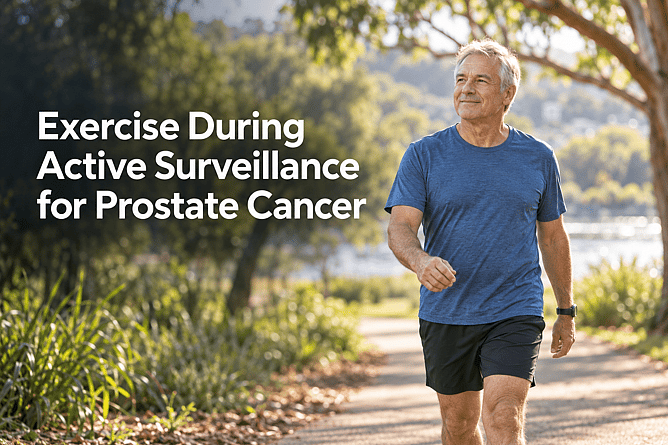
Exercise During Active Surveillance for Prostate Cancer
Exercise During Active Surveillance for Prostate Cancer
You have been told your prostate cancer is being watched rather than treated. That waiting can feel strange, but it is also one of the best windows you will ever get to build your strength. Here is how to use it.
Getting told you have prostate cancer is a jolt, and being told the plan is to watch it rather than treat it straight away can be a second, quieter one. Active surveillance is good news in most respects, it usually means the cancer is low risk and slow moving, but it can leave you in an odd spot: diagnosed, monitored, and yet not doing anything that feels like fighting back. A lot of blokes tell us this is the hardest part, the sense of sitting on your hands and waiting for the next test. The good news is that there is plenty you can do, and the most useful of it is exercise.
This is a guide for men on active surveillance in and around Perth, and for the partners and families walking it with them. It explains what active surveillance means in plain terms, why movement matters even when you are not being treated, what good exercise actually looks like, and how PROST! can help you turn a nervous waiting game into a period where you get genuinely fitter and stronger. None of this is medical advice about your individual case, that stays with your specialist, but it is the practical, evidence-aligned side of things that is squarely in our lane.
What Active Surveillance Actually Means
Active surveillance is a deliberate plan to monitor a low-risk prostate cancer closely rather than treat it immediately with surgery or radiation. It usually involves regular PSA blood tests, the occasional scan, and repeat biopsies over time, all designed to catch any change early while sparing you the side effects of treatment you may never need. The word active matters. This is not being ignored or forgotten, it is being tracked carefully by your medical team.
For many men it is the recommended path precisely because the cancer is slow enough that treating it now would do more harm than good. That is a genuinely reassuring thing to sit with, even if it does not always feel that way at three in the morning. The details of your surveillance, how often you are tested and what would prompt a change of plan, are set by your urologist and are specific to you, so those questions belong with them. What we can talk about with confidence is what you do with the time in between appointments, and that is where a bit of structure makes a real difference. Understanding the benefits of exercise during this stage is a good place to begin.
Why Exercise Matters Even When You Are Not Being Treated
It is easy to assume that exercise only becomes relevant once treatment starts, when you are managing fatigue from radiation or rebuilding after surgery. In fact the surveillance window may be the most valuable time of all to get moving, because you are well, you are not recovering from anything, and you have the freedom to build a strong baseline while you can.
Exercise oncology, the study of how physical activity helps people affected by cancer, has moved firmly into mainstream thinking, and its message for men on surveillance is simple. Regular activity keeps your muscle and bone strong, supports a healthy weight, and looks after your heart, which matters because cardiovascular health, not the prostate cancer itself, is what many men on surveillance will need to manage most over the years ahead. Staying active now is an investment in the whole of you, not just the prostate. This is the same principle that sits behind everything we do at PROST!, and it is why what PROST! is about starts with movement.
There is also the plainly practical point. If your surveillance ever does lead to treatment, and for many men it never does, you will go into that treatment fitter, stronger and better able to bounce back. Men who are already active tend to tolerate surgery and other treatments better and recover more smoothly. Building that resilience now, while you feel well, is far easier than trying to build it later under pressure.
What the Research Says, Simply
You do not need to wade through journals to take the point. The broad, well-established findings are these: men who stay physically active during and after a prostate cancer diagnosis tend to manage fatigue better, hold onto muscle and bone more effectively, and report better mood and quality of life than those who do not. Exercise is now recommended as standard supportive care alongside medical treatment, not as an alternative to it.
Part of why this matters is timing. Men on active surveillance are often in their fifties, sixties and seventies, a stage of life when muscle and bone naturally begin to slip away and heart health needs looking after regardless of any cancer diagnosis. Regular exercise pushes back on all of that at once. So the movement you do during surveillance is doing double duty, keeping you resilient in case treatment is ever needed and protecting the ordinary strength and fitness that let you keep doing the things you enjoy for years to come. That is a strong reason to start now rather than wait for a result that may never come.
What the evidence does not do is promise that exercise changes the cancer itself, and we will not pretend otherwise. Movement is not a cure, and it is not a substitute for the monitoring your specialist provides. What it reliably delivers is a fitter, stronger, more settled you, which is a worthwhile goal in its own right. If you want to dig into the common questions men ask about all this, our questions and answers page is a good, honest starting point.
What Good Exercise Looks Like
The word exercise covers a lot of ground, so it helps to be specific about what actually earns its place for men on active surveillance. A well-rounded approach brings together three ingredients, and the balance between them is part of what an exercise physiologist helps you get right.
Resistance Training
Lifting, pushing and pulling against resistance is the cornerstone. It maintains and builds muscle, keeps your bones strong, and supports the everyday strength that keeps you independent and active as you age. You do not need to become a gym rat, sensible, progressive resistance work a couple of times a week does the job, and it is scaled to where you are, not to where someone half your age is.
Aerobic Activity
Getting your heart and lungs working with brisk walking, cycling, swimming or similar looks after your cardiovascular health and lifts your energy. This is the ingredient that pays off across the decades, and it is easy to weave into daily life. Even regular walks around your Perth neighbourhood count, and they count more when they become a habit rather than a one-off.
Pelvic Floor and Foundations
A bit of pelvic floor work is a sensible foundation for any man thinking about prostate health, and it is far easier to learn while you feel well than to start from scratch later. Kept matter-of-fact, it is simply another muscle group worth looking after. An exercise physiologist can show you how to do it properly rather than leaving you guessing.
The thread running through all three is that they work best when they are supervised, gradually progressed, and, honestly, when they are social enough that you keep turning up. That last part is not a soft extra, it is often the difference between a program you stick to and one that fades after a fortnight.
Managing the Mental Side of Waiting
The physical case for exercise is strong, but for men on active surveillance the mental side can matter just as much. Waiting and watching brings its own low hum of worry, the wait for the next PSA result, the what-ifs, the sense of a decision permanently deferred. It is completely normal, and it is one of the things movement is genuinely good for.
Exercise is one of the most reliable non-medical ways to steady mood and take the edge off anxiety. It gives the worry somewhere to go, it returns a sense of control at a time when a lot feels out of your hands, and done in a group it breaks the isolation that a diagnosis can bring. There is real value in standing next to another bloke who is on the same path, having a laugh, and realising you are not the only one turning these thoughts over. That is why peer support sits right alongside the exercise in everything we do, and why the two together do more than either would alone.
How PROST! Runs It
PROST! is a Perth-based, volunteer-run charity built around a simple idea we sum up as Muscle, Mateship and Mood. Exercise rebuilds the body, mateship rebuilds confidence, and the two together lift how you feel. For a man on active surveillance, that combination is close to ideal, because it gives you the structured movement your body wants and the company your head needs.
Our sessions are led by qualified exercise physiologists, university-trained professionals who tailor movement to each man's stage, fitness and situation. That matters enormously on surveillance, because it means you are not guessing at what is safe or useful, you have someone who knows the territory setting the right load and progression for you. Sessions combine resistance and aerobic work with pelvic floor exercises, and they run in small groups at venues across Perth including Fremantle, so there is a good chance of one near you.
Then there is the coffee. The chat and the cuppa after a session are not an afterthought, they are part of the program, the bit where the mateship happens and where a lot of blokes first feel comfortable talking about what they are going through. Plenty of the men who now swear by our sessions came along reluctantly, dragged by a partner or a mate, and stayed for the company as much as the exercise. If you want a sense of the community you would be joining, about PROST! tells the story, and partners are genuinely part of it too, which is why we keep a dedicated space for partners of members.
On cost, we keep it deliberately simple. There is no membership fee. A small per-session fee covers the exercise physiologist and the venue, and you can find the current amount on our membership page. We never want money to be the reason a bloke misses out on getting stronger.
Getting Started
If you are on active surveillance and reading this, the first step is not a burpee. It is a quick conversation with your treating doctor or specialist, just to confirm there is nothing specific in your situation that needs a tweak before you begin. For most men on surveillance that green light comes easily, because you are well and being monitored rather than recovering from treatment.
Once you have it, the next step is to come along. You do not need to be fit, you do not need any experience, and you do not need to arrive with a plan, because working out the plan is our job, not yours. Turn up, meet the exercise physiologist and the other blokes, and start where you are. If it helps to ask a few questions first, get in touch and we will happily talk you through what a session looks like. You can also learn more about the whole PROST! approach on our website before you commit to anything.
The point of active surveillance is that you have time. The point of this article is that time is an opportunity, not just a wait. Spend some of it getting stronger, steadier and better connected, and whatever the years ahead hold, you will meet them in far better shape.
Frequently Asked Questions
Can I exercise during active surveillance for prostate cancer?
For most men on active surveillance, exercise is not only safe but actively encouraged, because you are being monitored rather than recovering from treatment. It is still worth a quick word with your specialist or GP before you start, especially if you have other health conditions, and once you have the go-ahead, regular resistance and aerobic exercise helps you stay strong, manage your weight and support your mood while you and your medical team keep an eye on things.
Does exercise help if I am not being treated yet?
Yes. Active surveillance is a period of monitoring, and it is a good window to build fitness rather than wait passively. Exercise supports your general and cardiovascular health, helps keep weight in check, and is well shown to lift mood and ease the anxiety that can come with waiting. It also means that if treatment is ever recommended down the track, you go into it fitter and better prepared.
What kind of exercise is best during active surveillance?
A balanced mix works best: resistance training to maintain muscle and bone, aerobic activity such as brisk walking or cycling for your heart and energy, and some pelvic floor work as a sensible foundation. The right amount and intensity depends on you, which is why supervised, progressive sessions led by an exercise physiologist are a good idea rather than guessing on your own.
Will exercise affect my PSA or my prostate cancer?
Exercise is not a treatment for prostate cancer and will not cure it, so any decisions about your care stay with your specialist and are guided by your monitoring. What exercise reliably does is improve your overall fitness, strength and wellbeing during surveillance. If you have questions about how activity relates to your PSA results, raise them with your treating doctor, who knows your individual situation.
How do I get started with PROST! in Perth?
Have a quick chat with your doctor first, then get in touch with PROST! and come along to a session at one of our Perth venues, including Fremantle. Sessions are led by qualified exercise physiologists who tailor the movement to where you are at, there is no membership fee, just a small per-session fee, and the coffee and chat afterwards is part of the deal, not an extra.
A Final Word
Active surveillance can feel like limbo, but it does not have to be wasted time. Move well, lean on the blokes around you, and keep your medical team in the loop, and you turn the waiting into building. Always check with your treating doctor or specialist before you start something new, and remember that at PROST! every session is run by qualified exercise physiologists who will meet you exactly where you are.